


Walk into any sports shop and you’ll find a wall of hand grips, all promising stronger fingers. Some of them do. Others sit in a drawer after two weeks, next to the resistance bands and the ab roller.
The trouble is that “hand grip” covers a lot of ground. A tool that builds crushing power in your palm won’t do much for a weak little finger, and the soft putty your physio hands you is a different job from a heavy-duty gripper. So instead of ranking brands, here are nine types, what each is good for, and who should pick it up.
1. Digital hand grip strengthener
This is the one I’d start with, and not because it makes your fingers stronger than any other tool. It doesn’t. The squeeze is the same as with a normal gripper. What it adds is a reading. Squeeze, and the screen shows how hard you actually pressed, in kilos or pounds. Plenty of models also remember your sessions or pass them to a phone app, so you’re not scribbling figures on the back of an envelope.
That matters more than it sounds. With a plain gripper, “it feels easier now” could mean you’re stronger, or it could mean you’ve got used to the discomfort. With a digital one, the figure either went up or it didn’t.
It’s also useful for spotting a weaker hand, and for anyone coming back from an injury who wants proof of progress.
Best for: people who like data, rehab patients, and anyone who’s plateaued without knowing it.
2. Fixed-resistance spring grippers
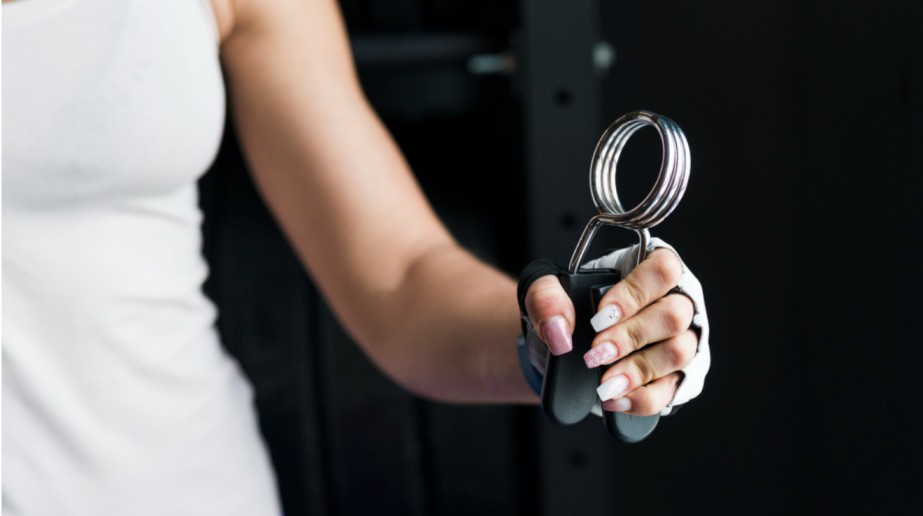
The classic. Two handles, one spring, one level of difficulty. They’re cheap, light, and you can chuck one in a gym bag.
The catch is obvious. Once the resistance gets easy, it stays easy, and you’ll need to buy a harder one. The better ones are sold in graded strengths, so you step up once the current one gets easy. The cheapest often don’t say how stiff they are at all, and then you’ve no way of knowing whether you’ve improved.
Best for: someone starting out on a small budget.
3. Adjustable-resistance grippers
Same basic design, with a dial or slider that lets you change how stiff it is. One tool covers a wide range, from light warm-up squeezes to properly hard work.
The downside is that the numbers printed on the dial are rough guides. Two adjustable grippers on the same setting can feel quite different. Still, if you want one tool that grows with you, this is the sensible pick.
Best for: most people who train regularly and don’t want to keep rebuying.
4. Heavy-duty crush grippers
These are the serious end of the spring family, built for people whose grip is already strong. They come in graded levels, and closing the hardest ones fully is a genuine achievement in strength circles.
They’re not for everyone. If you’re new to grip work, a stiff gripper tends to make you cheat with your whole arm and put a lot of stress on your tendons early on. Work up to them.
Best for: experienced lifters, climbers and grip-sport fans.
5. Individual finger trainers
Here’s where “finger strength” gets literal. Each finger gets its own pad or button, so none of them can hide behind the others.
And they usually try. In an ordinary squeeze the big fingers take over, while the ring and little fingers get a free ride. Isolating them fixes that. You’ll use lighter resistance than with a gripper, and you should, since fingers are small and tendons are fussy.
Best for: musicians, typists, climbers, and anyone with an obviously weak finger.
6. Therapy putty
It’s soft, a bit squashy, and sold in several firmness grades, normally colour coded. You can squeeze it, pinch it, roll it out and pull it apart.
It isn’t built for big strength numbers. Where it shines is slow, gentle work, which is why hand therapists reach for it after injuries and operations. Fingers stiff or sore? Begin here and leave the springs for later.
Best for: recovery, achy or arthritic hands, easy warm-ups.
7. Finger extensor bands
Almost every grip tool trains closing the hand. Almost nothing trains opening it. That imbalance is how people end up with achy elbows and cranky forearms.
An extensor band is a ring of rubber (some are shaped like a little hand, but a plain hair band works too) that you open your fingers against. It looks like a toy and takes about two minutes. Don’t skip it.
Best for: everybody who uses any other item on this list.

8. Pinch grip blocks
Crush strength and pinch strength aren’t the same thing. Pinching means your thumb pressing against your fingers. It’s how you hold a weight plate by the rim, lift a box by its edges or hang off a ledge.
Trainers run from plain weighted blocks to adjustable ones you hang a load from. Even holding a pair of smooth weight plates together works fine. Hold for time, put it down before your form goes, and repeat.
Best for: climbers, lifters, and anyone who struggles to hold flat objects.
9. Squeeze balls and stress balls
Last on the list, and it’s honest to say so. Foam and gel balls are the lightest option here. They won’t make you notably stronger once you’re past beginner level.
Use them to warm up cold hands, loosen stiffness, or if springs hurt too much. Maintenance rather than training, really.
Best for: desk workers, early rehab, warm-ups.
How to choose
Start with the problem, then pick the tool. If you want to know whether you’re improving, get a digital hand grip strengthener. If one finger lags, an individual trainer fixes it. If your hands hurt, use putty. Already strong? Look at crush grippers or pinch work next.
Honestly, two tools is plenty. One for squeezing, and an extensor band to keep the other side of your forearm in the game.
Staying injury-free
Tendons adapt much more slowly than muscle, which is why grip training is easy to overdo. Two or three sessions a week with a rest day between is plenty. Stop if you feel sharp pain, as opposed to ordinary muscle fatigue, and see a professional if it doesn’t settle.
If you’re recovering from an injury, check with a physio or hand therapist before you start any of this.
A few common questions
Do hand grips actually work?
They do, if you use them regularly and make things harder over time. It won’t happen overnight, but a few weeks of steady effort is usually when people start to notice.
Is a digital hand grip strengthener worth the extra money?
If seeing your numbers keeps you going, yes. The squeeze itself is no different. You just get an honest record of whether it’s working.
How often should I train?
Two or three sessions a week does it for most people.
Which is best for weak fingers?
Individual finger trainers or therapy putty, depending on whether you’re building strength or recovering.

Salman Zafar is the Founder of Health Loops. He is a professional blogger and content creator with expertise across different subjects, including health, environment, tech, business, marketing and much more

One thought on “The 9 Best Hand Grips for Improving Finger Strength”